

Presented by John D. Surma and Travis W. Vance | Fisher Phillips
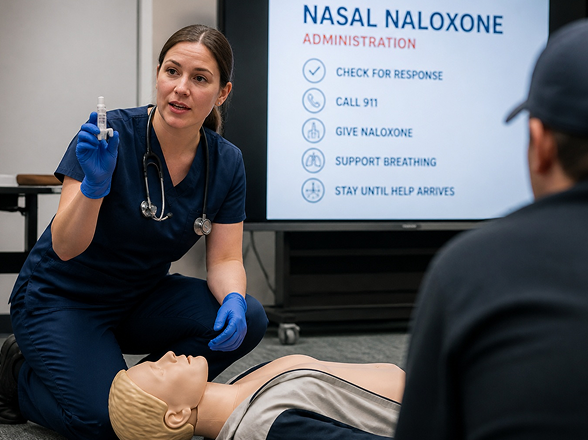
With opioid overdoses becoming a more commonplace issue in the workplace, OSHA just produced some new guidance for employers to help prepare for these types of emergencies. A September 24 fact sheet from the agency encourages employers to offer voluntary training to staff and managers on how to identify and respond to an overdose, and to consider keeping overdose reversal medication onsite. While the factsheet isn’t a regulation, it does suggest that OSHA views overdoses as a potential health and safety hazard that employers should be aware of. Here’s everything you need to know about the guidance and steps you can take to protect your workforce, visitors, and customers.
What The Guidance Says
OSHA’s guidance defines opioids as natural, semi-synthetic, and synthetic drugs, including prescription medications as well as illicit substances. The agency explains that an overdose can cause breathing to slow or stop, making a prompt emergency response critical. Managers, supervisors, and employees should understand how to respond when someone experiences a suspected overdose at work. The fact sheet also provides information on how opioid reversal medications like the FDA-approved naloxone and nalmefene work, which can temporarily reverse opioid effects while emergency responders are on the way.
OSHA’s guidance identifies several potential avenues for employers seeking to obtain naloxone, including:
- Pharmacies, retail outlets, and online sellers for FDA-approved nonprescription naloxone nasal sprays.
- Wholesale pharmaceutical distributors for bulk purchases.
- Group purchasing organizations that may offer discounted pricing.
- Manufacturer programs.
- Partnerships with state or local health departments, which may offer medication at low or no cost.
What This Means For Your Business
FP’s John D. Surma, a partner in the Houston office, says the guidance being issued at all serves as a bit of notice that OSHA is expecting employers to have overdose reversal drugs as part of their workplace first aid kits. OSHA regulations generally require that employers have “adequate” first aid supplies “readily available.”
“Having opioid overdose reversal medications (OORMs) on hand can save lives,” the notice says.
While employers may feel extremely cautious about “administering medications” to employees and potentially others in the workplace, most non-medical employers should be protected by various state “good Samaritan” laws, FP’s Surma says. OSHA’s guidance also emphasizes that OORMs generally are safe and effective when used as directed, work only when opioids are present in the person’s system, and generally have no effect on a person who has not taken opioids.
For some industries, Travis Vance, a Regional Managing Partner FP’s Charlotte office noted that having overdose reversal medications on-site could be critical for operations that rely on employees to work alone or in rural areas where emergency services may be difficult to reach or slow to respond.
“It’s especially important to have overdose reversal medication on hand on construction sites, jobsites where employees may be working alone, or in areas where very few people are around,” Vance said.
Other Issues to Consider
OSHA’s guidance stresses that reversal medication is not a replacement for emergency medical care. Employers that opt to keep these medications in their workplace will need to implement new training protocols for their emergency response teams or managers about steps to take before or after administering these drugs.
As part of a comprehensive training program, OSHA recommends that managers, employees, and staff know:
- To call 911, even if the individual regains consciousness.
- How to recognize possible overdose symptoms, including slow or stopped breathing, blue lips, unresponsiveness, pinpoint pupils, gurgling or snoring sounds, cold or clammy skin, stupor, coma, or respiratory failure.
- How OORMs work and how to administer the particular product available at the worksite, including the possibility that a second dose may be required.
- Possible withdrawal symptoms, including shaking, sweating, nausea, or anger.
- How to place a person safely in the recovery position while awaiting emergency responders.
- Applicable Good Samaritan protections.
- The importance of treating an affected person with care, respect, and professionalism.
- Make clear that the immediate response to a suspected overdose is a medical emergency, not a disciplinary investigation.
Steps You Can Take Now
OSHA’s new fact sheet is a useful reminder that workplace emergency plans should be equipped to address an opioid overdose. Stocking naloxone or another OORM is not mandated by this guidance, but OSHA outlines best practices to support the use of these medications.
1. Determine if your workplace is prepared for an overdose emergency
Review your business’ emergency-action plans and first-aid procedures to ensure they clearly address a suspected overdose. It should outline who will call 911, who will retrieve emergency supplies, and how the organization will direct emergency responders to the affected person.
2. Determine whether to maintain OORMs
Deciding to carry OORMs at your worksite should account for your workforce, location, existing safety resources, and ability to store and maintain the medication properly. Organizations with multiple locations should also recognize that availability of these drugs may vary by jurisdiction. For placement, OSHA recommends visible, accessible locations, including near first-aid kits and automated external defibrillators (AEDs). Larger worksites may need multiple kits placed in different areas. Clear signs can help employees quickly locate the medication in an emergency.
3. Establish storage and supply controls
If an employer elects to stock reversal medication, OSHA recommends following the product’s labeling for storage and keeping the medication away from direct light, excessive heat, and freezing temperatures. Employers should also monitor expiration dates and designate an individual – such as a safety officer – to manage inventory, storage, and restocking. Add OORM checks to the organization’s existing first-aid or safety-equipment inspection schedule to easily stay in compliance.
4. Provide voluntary, product-specific training
OSHA recommends that employers consider voluntary training so employees understand both the risks of overdose and the organization’s emergency-response procedures. The training should be specific to the medication and delivery method available at the worksite. Consult with your FP attorney to develop a response plan specific to your location and individual worksite risks.
Employers with questions regarding this Update may contact the authors of this post or their usual employment law counsel.
Reprinted with permission from Fisher Phillips.